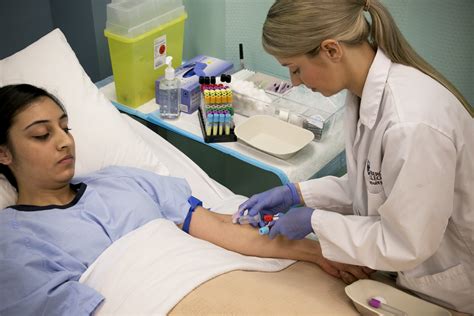
Mastering Phlebotomy Medical Terminology: A Essential Guide for Aspiring Healthcare Professionals
Welcome to your essential resource for phlebotomy terminology. Whether you’re a nursing student, a medical assistant, or an aspiring phlebotomist, understanding the language of phlebotomy is the foundation of accurate testing, safe patient care, and prosperous interaction within healthcare teams. This guide combines clear definitions, practical context, and memorable tips to help you master the terminology that underpins every blood draw, specimen handling, and laboratory result interpretation.
Why Phlebotomy Terminology Matters
Proficiency in phlebotomy terminology does more than help you ace exams. It enhances patient safety, improves specimen integrity, and fosters clear communication with clinicians, nurses, and laboratory staff. When you can accurately name a tube, an additive, or a technique, you reduce the risk of mislabeling, specimen mix-ups, and delays in diagnosis.For aspiring healthcare professionals, a strong vocabulary in phlebotomy also supports:
- Effective charting and recordkeeping
- Understanding test panels (e.g., CBC, CMP, BMP, coagulation studies)
- Compliance with industry standards and quality control measures
- Professional confidence in clinical settings
Core Phlebotomy Terms You Should Know
Below is a structured glossary of essential phlebotomy terms. Use this as a study scaffold,then expand your knowledge with hands-on practice and case-based learning. Note: terms are grouped for logical learning-term, definition, and typical usage in patient care and laboratory settings.
| Term | Definition | Typical Usage |
|---|---|---|
| Phlebotomy | The practice of drawing blood for testing, transfusion, or research. | “Phlebotomy is performed in the lab or clinic to obtain a patient’s blood sample.” |
| Venipuncture | “A clean venipuncture is essential for an accurate specimen.” | |
| Capillary blood draw | “Capillary draws are common for point-of-care glucose monitoring.” | |
| Venous blood | Blood drawn from a vein, typically used for most laboratory tests. | “Venous blood samples are collected using evacuated tubes.” |
| Anticoagulants | “EDTA is used for CBC tubes, while citrate is used for coagulation studies.” | |
| EDTA | Ethylenediaminetetraacetic acid; a common anticoagulant in lavender-top tubes for hematology tests. | “Use EDTA tubes for complete blood counts.” |
| Citrate | Anticoagulant used in light blue-top tubes for coagulation testing; preserves clotting factors. | “Citrate tubes are needed for PT/INR testing.” |
| Heparin | Anticoagulant used in green-top tubes; good for plasma chemistry testing. | “Heparin tubes are suitable for many metabolic panels.” |
| Clot activator | “Clot activator helps produce a clear serum for chemistry testing.” | |
| gel separator | “SST tubes contain gel separator for cleaner serum.” | |
| Order of Draw | “The order of draw minimizes cross-contamination between tubes.” | |
| Tourniquet | “Apply a tourniquet about 3-4 inches above the puncture site.” | |
| Specimen labeling | “Label specimens promptly after collection with two identifiers.” | |
| Chain of custody | “Maintain chain of custody for controversial or legally sensitive tests.” | |
| Accession number | “Enter the accession number on the tube label and requisition form.” |
Practical Tips for Learning and Retaining Terminology
- Create a personal glossary: write terms, definitions, and an example sentance in your own words.
- use mnemonic devices: e.g., EDTA stands for “Evil Dragons That Arrests” (memory aid) for lavender tubes-then link to real uses.
- Flashcards with spaced repetition: test yourself on tube colors, additives, and test names.
- Watch labeling and documentation examples: study specimen labeling templates, requisitions, and chain-of-custody forms.
- Join study groups or online forums: explain terms to peers to reinforce recall.
Common Abbreviations and Acronyms in Phlebotomy
Familiar abbreviations help you read requisitions,lab reports,and procedure notes quickly. Here’s a compact reference:
| Abbreviation | Meaning | Usage |
|---|---|---|
| CBC | Complete Blood Count | Common hematology panel on EDTA tubes. |
| CMP | Comprehensive Metabolic Panel | Chemistry panel often run on serum or plasma tubes. |
| BMP | Basic Metabolic Panel | Subset of CMP focusing on essential electrolytes and kidney function. |
| PT | Prothrombin Time | Coagulation test; often in light blue top tubes (citrate). |
| INR | International Normalized ratio | Standardized measure derived from PT; used to monitor anticoagulation. |
| Hgb | Hemoglobin | Part of CBC; reflects oxygen-carrying capacity of blood. |
| Hct | Hematocrit | Volume percentage of red blood cells in blood; part of CBC. |
| QC | Quality Control | Laboratory performance checks to ensure accuracy. |
Tip: Keep a pocket-sized cheat sheet of abbreviations you encounter most often in your rotation or coursework. Review it weekly to build automatic recognition.
Mastery Roadmap: Practice, Case Studies, and Real-World Context
Becoming proficient in phlebotomy terminology isn’t just about memorizing words. It’s about recognizing how terms fit into real clinical scenarios, interpreting test orders, and communicating clearly with team members and patients. Here’s a practical roadmap to guide your study and future practice.
- Foundational learning: Build your glossary of terms, tube types, and common tests.
- Contextual reading: Read lab requisitions and specimen labels to see how terminology appears in workflow.
- Mini case studies: Work through short scenarios to apply terms (see Case Studies below).
- Hands-on practice: Under supervision, observe or simulate venipuncture terminology in labeling, requisitions, and specimen handling.
- Assessment and reflection: Test yourself, review errors, and refine your vocabulary and confidence.
Case Studies: Applying Terminology in Context
Case Study A: A 54-year-old patient requires a CBC, CMP, and coagulation panel. The phlebotomist selects lavender (EDTA) tube for CBC, red-top/gold SST for CMP, and light blue citrate tube for PT/INR. the team discusses the order of draw to prevent cross-contamination of additives. the labels are checked against the requisition; the specimen is labeled with the patient’s two identifiers and accession number.
Case Study B: A pediatric patient requires a capillary blood sugar test. A fingerstick is performed using capillary puncture terminology, ensuring proper labeling and specimen integrity for point-of-care testing. The clinician notes the time of collection and the device used for testing in the patient record.
These cases illustrate how terminology translates into practical decisions, patient care, and reliable lab results.
First-Hand Experience: Insights from Aspiring Professionals
Many students and new professionals report that learning phlebotomy terminology is most effective when it’s tied to real testing scenarios. Here are a few common reflections and tips from learners who recently joined clinical settings:
- Seeing terms on requisitions helps anchor memory in real duties rather than abstract definitions.
- Labeling and chain-of-custody concepts become second nature after observing a few successful collections.
- Understanding tube additives and colors reduces confusion during routine blood draws and improves adherence to the order of draw.
- Practicing with mock samples and mock requisitions builds confidence before live patient encounters.
Benefits of Mastering Phlebotomy Terminology
- improved accuracy in labeling, sample handling, and test ordering.
- Enhanced patient communication and reduced anxiety during blood collection.
- Better collaboration with laboratory staff and clinicians.
- Increased preparedness for certification exams and real-world job performance.
- Stronger safety practices and compliance with regulatory standards.
Conclusion: Start Your journey to Phlebotomy Proficiency
Mastering phlebotomy terminology is a practical, career-boosting investment. By building a solid vocabulary around venipuncture, blood collection tubes and additives, specimen labeling, and laboratory workflows, you lay a foundation for accurate tests, safe patient care, and effective teamwork. Remember to combine study with real-world practice,review case studies,and continuously reinforce your knowledge with memory aids and peer discussions.
As you advance, you’ll encounter more specialized terms related to coagulation testing, immunology, and molecular diagnostics. Keeping your glossary up to date and connecting terminology to patient outcomes will help you stand out as a capable, reliable healthcare professional.
Quick Reference Glossary
| term | Plain Language | Why It Matters |
|---|---|---|
| Venipuncture | Vein needle-stick | Primary method for obtaining blood samples. |
| EDTA | Lavender-top additive | Preserves cells for CBC testing. |
| Coagulation | Clotting tests | Assesses clotting function and bleeding risk. |
| Order of Draw | Tube sequence | Prevents cross-contamination of additives. |
| Labeling | Identifying the sample | Ensures patient safety and test accuracy. |